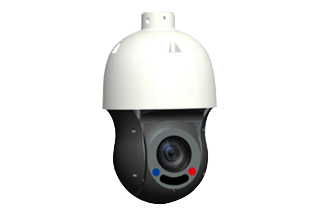
Long-distance surveillance can be challenging when cameras need to monitor large outdoor areas, remote facilities, transportation infrastructure, or industrial sites. Limited visibility, changing weather, poor lighting, and extended monitoring distances can all affect surveillance performance.
PTZ Cameras provide a flexible solution for these applications by combining pan, tilt, and zoom functions in a single camera system. With remote directional control and powerful optical zoom, PTZ cameras can monitor different areas and focus on distant targets without requiring multiple fixed cameras.
When designed for harsh outdoor environments, PTZ cameras can also provide reliable monitoring under rain, dust, temperature changes, and other demanding conditions.
How PTZ Cameras Support Long-Distance Surveillance
Pan and Tilt for Flexible Coverage
The pan and tilt functions allow the camera to move horizontally and vertically. Instead of monitoring only one fixed direction, operators can change the viewing angle according to the surveillance requirement.
This flexibility is particularly useful for large facilities, open outdoor areas, roads, ports, construction sites, and industrial locations.
Optical Zoom for Distant Targets
Optical zoom is one of the most important features for long-distance monitoring. It allows the camera to magnify distant objects while maintaining better image detail than simple digital enlargement.
A PTZ camera with an appropriate optical zoom range can help operators inspect distant vehicles, people, equipment, or other objects without physically moving the camera closer to the target.
Preset Positions for Efficient Monitoring
Many PTZ cameras support preset viewing positions. Operators can configure important monitoring points and quickly move the camera between them.
For large surveillance areas, preset positions can make routine monitoring more efficient and reduce the time required to manually adjust the camera.
PTZ Cameras in Harsh Outdoor Environments
Outdoor surveillance equipment must operate reliably despite changing environmental conditions. Depending on the application, a PTZ camera may be exposed to rain, dust, wind, temperature variations, or strong sunlight.
Weather-Resistant Housing
A robust enclosure can help protect internal camera components from environmental exposure. Proper protection is particularly important for cameras installed outdoors for continuous operation.
Dust and Moisture Protection
Dust and moisture can affect electronic and optical components over time. A properly designed protective enclosure can help reduce the risk of environmental contamination and support reliable operation.
Temperature Adaptability
Outdoor environments can experience significant temperature changes between day and night or across different seasons. PTZ cameras intended for demanding applications should therefore be designed to operate within an appropriate temperature range.
Improving Monitoring in Low-Light Conditions
Long-distance surveillance is not limited to daytime operation. Many security applications require continuous monitoring after sunset.
PTZ cameras can incorporate technologies such as infrared illumination, enhanced low-light imaging, or thermal imaging to improve visibility in challenging lighting conditions.
Infrared Night Vision
Infrared illumination can help conventional cameras capture images in dark environments. When combined with optical zoom, it can support surveillance of distant targets during nighttime operations.
Thermal Imaging Integration
For applications where visible-light imaging becomes difficult, thermal imaging can provide another method of detecting objects based on their heat signatures.
This can be particularly useful for perimeter security, industrial facilities, critical infrastructure, and remote outdoor locations.
Applications of PTZ Cameras for Long-Distance Monitoring
Industrial Facilities
Large factories and industrial plants may contain extensive outdoor areas that require continuous surveillance. PTZ cameras can monitor equipment, access points, storage areas, and facility perimeters from strategically selected locations.
Ports and Transportation Hubs
Ports, airports, rail yards, and other transportation facilities often cover large areas. Long-range PTZ cameras can provide flexible monitoring of vehicles, cargo areas, entrances, and other critical zones.
Highway and Traffic Monitoring
PTZ cameras can be used to monitor roads and highways from elevated positions. Operators can adjust the viewing direction and zoom into specific traffic areas when necessary.
Perimeter Security
Large facilities often need to monitor boundaries that cannot be effectively covered by a single fixed camera. PTZ cameras can provide flexible coverage and allow operators to investigate suspicious activity in different areas.
Construction Sites
Construction sites change continuously and may contain valuable equipment and materials. PTZ cameras can provide remote monitoring across large and temporary work areas.
Remote Infrastructure
Power facilities, pipelines, energy installations, and other remote infrastructure may require surveillance where regular physical inspection is difficult. Long-distance PTZ cameras can help operators monitor these locations from a safer or more convenient position.
How PTZ Cameras Improve Surveillance Efficiency
The combination of wide-area movement and optical zoom makes PTZ cameras a versatile option for large-scale surveillance.
Instead of installing numerous fixed cameras for every viewing direction, a strategically positioned PTZ camera can monitor multiple areas and allow operators to focus on specific targets when required.
This can help:
-
Expand surveillance coverage
-
Improve operator flexibility
-
Reduce blind spots
-
Support remote inspections
-
Improve response to suspicious activity
-
Reduce the need for frequent physical inspections
However, PTZ cameras and fixed cameras can also complement each other. Fixed cameras can provide continuous coverage of specific areas, while PTZ cameras can be used for active investigation and detailed observation.
PTZ Cameras for Long-Distance Monitoring in Harsh Conditions offer a flexible approach to outdoor surveillance. Their pan, tilt, and optical zoom capabilities allow operators to monitor wide areas and inspect distant targets remotely.
When combined with weather-resistant housing, reliable low-light performance, infrared illumination, thermal imaging, and intelligent tracking, PTZ cameras can support demanding surveillance applications in industrial, transportation, infrastructure, and security environments.
For the best results, camera selection should consider monitoring distance, required image detail, environmental conditions, night-time performance, movement range, and installation requirements. With the right configuration, PTZ cameras can provide reliable long-distance monitoring while improving surveillance flexibility and operational efficiency.