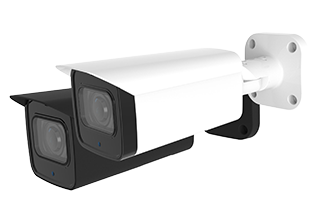
Large industrial facilities often cover extensive areas and include production lines, warehouses, storage yards, loading zones, entrances, and equipment areas. Monitoring these environments effectively requires a surveillance system that can provide wide coverage, high-quality video, and centralized management.
IP cameras offer a flexible solution for large-scale industrial surveillance. By transmitting video through network infrastructure, IP camera systems can connect multiple monitoring points and provide security teams with centralized access to live and recorded video.
Covering Large Industrial Areas
One of the main challenges in industrial surveillance is achieving sufficient coverage across a large facility. Different areas may require different camera types.
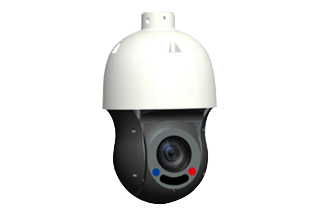
Fixed IP cameras can monitor entrances, production areas, corridors, and specific equipment zones. PTZ IP cameras can provide adjustable viewing angles and optical zoom for larger open spaces.
By combining different camera types, security teams can build a surveillance network that provides both detailed monitoring and broader situational awareness.
High-Resolution Monitoring for Critical Areas
Industrial facilities often require clear images to identify people, vehicles, equipment conditions, and other important details.
High-resolution IP cameras can capture more visual information than lower-resolution systems. This can be particularly useful in areas such as:
-
Factory entrances
-
Loading and unloading zones
-
Warehouse aisles
-
Production lines
-
Parking areas
-
Perimeter zones
-
Equipment storage areas
Clear video can also make recorded footage more useful when security teams need to review an incident.
Remote Monitoring Across Multiple Locations
Large industrial operations may include multiple buildings or geographically separated facilities. IP cameras can connect these monitoring locations through network infrastructure.
Authorized personnel can access camera feeds remotely, allowing security teams to monitor different areas without physically visiting every location.
This can help organizations improve their response to unusual activities, unauthorized access, or other security events.
Integrating IP Cameras with NVR Systems
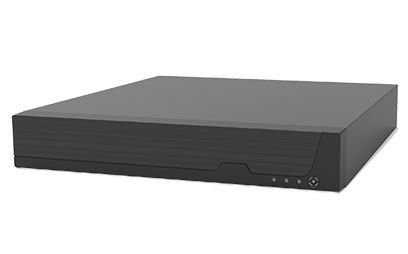
An IP camera system can work together with a Network Video Recorder (NVR) to store and manage surveillance footage.
An NVR can provide centralized video recording for multiple IP cameras. Security personnel can search recorded footage, review events, and manage connected cameras from a centralized interface.
For large industrial facilities, centralized video management can simplify surveillance operations and reduce the complexity of monitoring numerous independent camera systems.
Using PTZ IP Cameras for Wide-Area Surveillance
Some industrial environments include large outdoor spaces where a fixed camera may not provide sufficient coverage.
PTZ IP cameras can pan, tilt, and zoom to monitor different areas. Optical zoom can also help operators inspect distant objects or activities without installing a camera at every individual monitoring point.
PTZ cameras can therefore complement fixed IP cameras in yards, parking areas, transportation zones, and facility perimeters.
AI Analytics for Industrial Security
Modern IP cameras can incorporate intelligent video analytics to help security teams identify potentially important events.
Depending on the camera and software system, AI-based functions may assist with detecting:
-
Unauthorized movement
-
Intrusion into restricted areas
-
Suspicious activities
-
People entering designated zones
-
Vehicles in monitored areas
-
Abandoned or unusual objects
Instead of requiring operators to continuously watch every camera feed, intelligent analytics can help draw attention to events that require further investigation.
PoE for Easier Camera Deployment
Power over Ethernet (PoE) can simplify the installation of IP cameras by allowing compatible network cables to carry both data and electrical power.
For large industrial surveillance projects, PoE can reduce the number of separate cables required for individual cameras and simplify connections between cameras and network equipment.
This can be particularly useful when deploying cameras across production facilities, warehouses, offices, and other connected areas.
Improving Perimeter Security
Industrial facilities often have large perimeters that require continuous monitoring. IP cameras can be positioned at gates, fences, vehicle entrances, and other access points.
Combining fixed cameras with PTZ cameras and intelligent detection technologies can provide multiple layers of perimeter visibility.
This approach can help security personnel identify unusual movement and respond more quickly when an event occurs.
Supporting Centralized Security Management
A large-scale industrial surveillance system may include dozens or even hundreds of cameras. Managing these cameras individually can become inefficient.
Network-based IP camera systems allow multiple devices to be connected to a centralized surveillance platform. Operators can monitor live video, review recordings, manage camera settings, and respond to events from a unified system.
Centralized management becomes increasingly important as surveillance requirements grow.
Using IP cameras for large-scale industrial surveillance can provide flexible, centralized, and scalable security monitoring. High-resolution cameras, PTZ functionality, NVR integration, PoE connectivity, and intelligent analytics can work together to address the diverse monitoring requirements of modern industrial facilities.
By carefully planning camera locations, network infrastructure, storage capacity, and monitoring functions, businesses can build an IP camera system that provides reliable visibility across production areas, warehouses, loading zones, and facility perimeters.