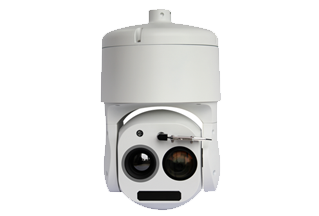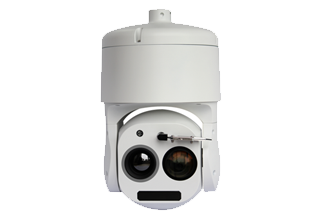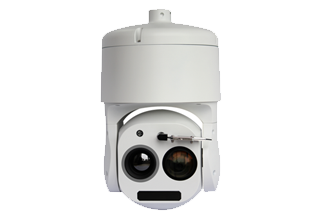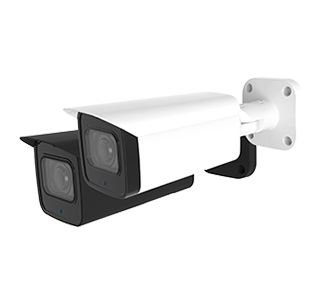
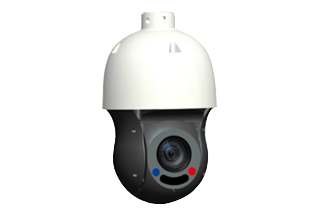
Critical infrastructure facilities such as power substations, water treatment plants, oil and gas facilities, transportation hubs, and industrial complexes require reliable security systems to protect people, assets, and essential services. These locations often cover large areas with restricted access, complex layouts, and vulnerable perimeter zones. Traditional fixed cameras can provide continuous monitoring, but their limited field of view may leave security teams with blind spots or insufficient detail when an incident occurs.
Long-range PTZ (Pan-Tilt-Zoom) cameras offer a flexible surveillance solution for these demanding environments. By combining remote directional control, powerful optical zoom, and advanced imaging capabilities, they help security teams monitor distant areas, investigate suspicious activity, and respond to potential threats more effectively.
Key Applications Across Critical Infrastructure
Power Substations and Electrical Facilities
Power substations contain transformers, switchgear, control buildings, and other essential electrical equipment. Unauthorized access or deliberate damage can disrupt operations and create significant safety risks.
Long-range PTZ cameras can monitor perimeter fences, equipment yards, entrance gates, and access roads from strategically selected mounting points. Operators can use preset viewing positions to inspect specific zones and manually zoom in when an alarm or unusual activity requires investigation.
For facilities with demanding nighttime requirements, low-light imaging or integrated thermal imaging can supplement conventional visible-light surveillance.
Oil and Gas Facilities
Oil refineries, gas processing plants, pipeline terminals, and storage facilities often contain hazardous materials and extensive outdoor infrastructure.
Long-range PTZ cameras help security teams observe tank farms, pipeline corridors, loading areas, and restricted access points. Remote pan, tilt, and zoom functions reduce the need for personnel to travel to every observation point during routine monitoring or initial incident assessment.
Where cameras must operate in hazardous locations, equipment selection should account for the site's classified-area requirements. Standard outdoor weatherproofing does not automatically make a camera suitable for explosive atmospheres. Certified equipment and installation methods may be necessary.
Water Treatment Plants and Reservoirs
Water treatment facilities, pumping stations, and reservoirs can include remote structures, open storage areas, and long perimeter boundaries.
PTZ cameras can monitor access roads, gates, treatment buildings, and vulnerable sections of the perimeter. Their ability to reposition and zoom allows operators to inspect multiple areas with fewer viewing devices than a fixed-camera-only design might require.
However, PTZ cameras should not be treated as a complete replacement for fixed cameras. A PTZ camera looking toward one target may no longer provide a view of another area. Combining PTZ cameras with fixed cameras helps maintain continuous coverage of important zones.
Airports, Seaports, and Transportation Hubs
Airports, ports, rail yards, and freight terminals contain extensive operational areas with constant vehicle and personnel movement.
Long-range PTZ cameras can support surveillance of access roads, cargo yards, parking areas, restricted boundaries, and selected approach routes. High optical zoom helps operators examine activity at a distance, while automated tracking can assist in following moving vehicles or people where supported.
For effective deployment, the camera's field of view, movement speed, and preset configuration should reflect the site's traffic patterns and operational priorities.
Industrial Plants and Energy Storage Facilities
Large manufacturing sites, power generation facilities, and battery energy storage installations often have multiple buildings, outdoor equipment zones, and restricted operational areas.
Long-range PTZ cameras provide flexible monitoring of equipment yards, perimeter boundaries, loading areas, and remote access points. When integrated with a video management system (VMS), they can help operators move from a general surveillance view to a closer inspection of a specific event.
For battery storage facilities, thermal cameras may also help identify abnormal surface temperature patterns on suitable equipment. However, thermal imaging is not a substitute for dedicated battery monitoring, fire detection, or emergency response systems.
Essential Features to Look for in a Long-Range PTZ Camera
Selecting a PTZ camera for critical infrastructure requires careful evaluation of both imaging performance and operational reliability.
High Optical Zoom
Optical zoom is one of the most important specifications for long-distance surveillance. Buyers should evaluate the lens's focal length range, optical zoom ratio, sensor resolution, and expected target distance together.
A high zoom ratio does not guarantee that a camera can identify every target at a specified distance. The required performance should be tested against real site conditions and the intended task, such as detection, observation, recognition, or identification.
High-Resolution Imaging
Higher sensor resolution can provide more pixels across a target, which may improve the ability to distinguish important visual details. However, image quality also depends on lens performance, focus accuracy, compression settings, lighting, and network bandwidth.
Facilities should choose a resolution that matches their security objectives rather than relying on megapixel count alone.
Low-Light and Night Vision Performance
Security incidents can occur at any time, making nighttime imaging an important selection criterion.
Depending on the application, useful features may include:
-
High-sensitivity image sensors for low-light environments.
-
Infrared illumination for scenes where additional visible light is undesirable.
-
Wide Dynamic Range (WDR) for scenes containing both bright and dark areas.
-
Thermal imaging for detecting temperature contrasts in darkness or certain visually challenging conditions.
Thermal and visible-light cameras serve different purposes. Thermal imaging detects infrared radiation associated with surface temperature, while conventional cameras capture reflected visible light. Dual-sensor PTZ systems can combine both technologies when a site requires complementary detection and visual verification.
Automatic Tracking and Intelligent Analytics
AI-enabled PTZ cameras may support human and vehicle classification, motion detection, intrusion alerts, and automatic target tracking.
These functions can reduce the need for operators to continuously control camera movement manually. When an analytics system identifies a relevant target, the camera may automatically reposition or zoom to follow it.
Performance depends on the camera model, analytics configuration, target behavior, and environmental conditions. Security teams should validate tracking accuracy under representative site conditions before deployment.
Weather Resistance and Mechanical Reliability
Outdoor infrastructure cameras may face rain, dust, temperature fluctuations, strong winds, and corrosive environments.
When evaluating a camera, consider its IP protection rating, operating temperature range, corrosion resistance, wind-load requirements, and the durability of its pan-tilt mechanism. Additional environmental protection may be necessary for coastal facilities, chemical plants, or locations with severe weather.
Integrating PTZ Cameras with Existing Security Systems
A long-range PTZ camera delivers greater value when integrated into a coordinated security architecture.
Video Management Systems
A VMS allows operators to view live video, review recordings, manage camera presets, and investigate incidents from a centralized interface. Integration can also simplify monitoring across multiple infrastructure sites.
Network Video Recorders
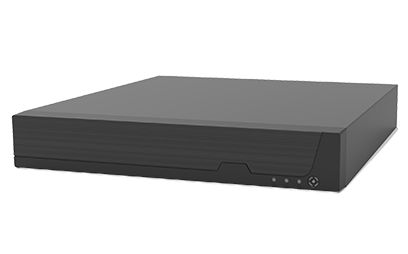
Network video recorders (NVRs) can store footage for later investigation and support continuous or event-triggered recording, depending on the system configuration. Storage capacity should be planned around resolution, frame rate, compression, retention requirements, and the number of cameras.
Alarm and Access Control Integration
When supported by the system, access control events, perimeter sensors, and intrusion alarms can trigger a PTZ camera to move to a predefined position. Operators can then examine the associated scene and determine whether further action is needed.
Automated camera movement should be designed carefully. A camera responding to one alarm may stop monitoring another area, so critical zones may require overlapping coverage or dedicated fixed cameras.
Network and Cybersecurity Considerations
Because IP PTZ cameras are network-connected devices, cybersecurity is an important part of critical infrastructure protection.
Recommended practices include:
-
Changing default credentials and enforcing strong authentication.
-
Restricting camera access through network segmentation and least-privilege permissions.
-
Using encrypted connections and secure management protocols where supported.
-
Keeping firmware updated through a controlled change-management process.
-
Monitoring system logs and limiting remote access to authorized personnel.
-
Separating surveillance equipment from operational technology networks whenever appropriate.
Security teams should also assess compatibility with existing VMS and NVR platforms, including supported ONVIF profiles, video codecs, and PTZ control functions.
Long-range PTZ cameras are valuable tools for protecting critical infrastructure because they combine flexible camera movement, optical zoom, and remote monitoring in a single surveillance device. They can support security operations across power substations, oil and gas facilities, water treatment plants, transportation hubs, and large industrial sites.
Successful deployment requires more than choosing a camera with a high zoom ratio. Infrastructure operators should evaluate optical performance, nighttime imaging, environmental protection, analytics, network security, and integration with existing surveillance systems. Combining PTZ cameras with fixed cameras, perimeter sensors, and appropriate security procedures creates a more comprehensive protection strategy.