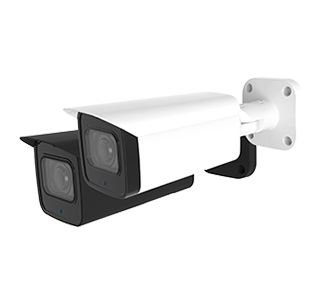
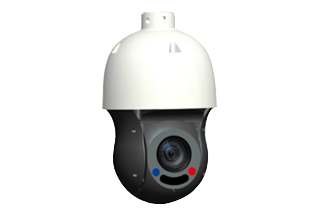
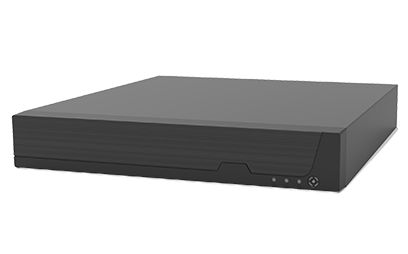
Farms and storage yards often cover large areas with scattered buildings, open fields, equipment parking zones, and remote access roads. Protecting these environments presents unique security challenges. Valuable assets such as tractors, harvesters, trailers, fuel tanks, livestock supplies, and stored materials may be located far from the main office or residential buildings.
Traditional surveillance systems may struggle to provide sufficient coverage across these extensive properties. An NVR system (Network Video Recorder system) offers a practical solution by connecting network cameras, recording video centrally, and allowing authorized users to monitor multiple locations from a single interface.
When combined with suitable long-range cameras, reliable network infrastructure, and intelligent video analytics, an NVR system can help farms and storage yards improve visibility, investigate incidents, and manage security more efficiently.
Planning Camera Placement Across the Property
Effective long-range surveillance begins with a site survey. Instead of installing cameras at arbitrary locations, security planners should map the property and identify the areas where visibility is most important.
Main Entrances and Gates
Place cameras where they can capture vehicles entering and leaving the property. Consider separate overview and identification views when license plates or driver details must be recorded.
Equipment Parking Areas
Position cameras to cover tractors, harvesters, trailers, and other high-value machinery. Avoid placing all cameras at the same angle, which may leave blind spots behind large vehicles or buildings.
Fuel and Material Storage
Fuel tanks, chemical storage areas, and valuable inventory locations may require dedicated cameras. Equipment selection and installation must reflect the hazards and environmental conditions of each area.
Perimeter Roads and Remote Boundaries
Long-range cameras can monitor selected access roads and open approaches. Trees, crops, buildings, terrain changes, and seasonal vegetation should be considered because they can obstruct the field of view.
Warehouses and Workshops
Indoor or sheltered cameras can monitor loading zones, doors, tool storage, and workshop entrances. Outdoor-rated cameras are generally preferable in exposed areas where dust, rain, and temperature changes are common.
A good camera layout balances coverage, image detail, installation cost, and maintenance accessibility.
Connecting Remote Cameras to the NVR
On large agricultural properties, cameras may be located too far from the main building for a simple Ethernet connection. Network design is therefore a critical part of long-range surveillance.
Several connection methods may be suitable.
Ethernet: Appropriate for cameras within supported cable-distance limits. Standard copper Ethernet runs are generally limited to approximately 100 meters per channel unless an appropriate extension solution is used.
Fiber-optic cable: Useful for long distances, high bandwidth, and links between buildings. Fiber can also provide electrical isolation between network segments.
Wireless bridges: Can connect remote buildings or camera poles where a clear radio path exists. Performance depends on distance, interference, antenna alignment, and environmental conditions.
Cellular connectivity: May be useful at isolated locations without practical wired infrastructure. Data usage, signal quality, recurring costs, and network reliability must be considered.
A hybrid network often provides the best balance. For example, a farm may use fiber between its main buildings and wireless bridges to connect remote equipment areas.
Designers should also calculate the total video bandwidth, especially when multiple high-resolution cameras stream continuously to a central recorder.
Using Motion Detection and Video Analytics
An NVR system can do more than record video continuously. Supported motion detection and video analytics can help operators identify events that deserve attention.
Useful functions may include:
-
Motion-triggered recording.
-
Human and vehicle classification.
-
Line-crossing detection.
-
Intrusion detection within defined zones.
-
Alerts for activity outside scheduled operating hours.
-
Search tools for locating recorded events.
For example, a vehicle entering a storage yard after closing time could trigger an alert if the camera and NVR support the required analytics.
However, outdoor environments can generate false alarms from moving branches, insects, rain, dust, wildlife, and changing light conditions. Camera positioning, detection-zone configuration, sensitivity settings, and event testing are important for improving reliability.
Video analytics should support security personnel rather than replace human judgment. Alerts should be tested under real operating conditions before the system is relied upon for critical decisions.
Improving Nighttime Security
Nighttime surveillance is especially important when machinery, fuel, and stored goods are left unattended.
The right approach depends on the distance to the target and the level of detail required.
Infrared Cameras
Infrared illumination can provide black-and-white video in darkness without requiring visible lighting. The effective range depends on the camera, lens, infrared illuminator, target reflectivity, weather, and installation conditions.
Supplementary Lighting
Visible-light security lighting can improve color detail and help operators distinguish objects. Lighting should be positioned to avoid glare, deep shadows, and direct illumination into the camera lens.
Thermal Cameras
Thermal imaging detects differences in emitted infrared radiation and can help reveal people or vehicles in low-visibility conditions. It is particularly useful for detecting activity across open ground, although it generally cannot replace visible-light cameras for detailed facial or license-plate identification.
For larger properties, combining thermal detection with optical verification can provide a useful layered security approach.
Protecting the NVR System From Environmental and Power Risks
Agricultural surveillance equipment often operates in challenging conditions. Dust, humidity, temperature extremes, lightning, and unstable power supplies can affect cameras, switches, recorders, and network connections.
A robust installation should include appropriate environmental protection.
-
Select cameras with suitable ingress-protection ratings for outdoor exposure.
-
Use weatherproof enclosures and correctly installed cable glands where required.
-
Protect network and power circuits against electrical surges.
-
Provide suitable grounding and lightning protection in accordance with local electrical requirements.
-
Use an uninterruptible power supply (UPS) for critical recording equipment.
-
Maintain backups of system configuration and administrator credentials.
-
Inspect connectors, mounting brackets, and cable routes periodically.
The NVR itself should generally be installed in a secure, dry, access-controlled location. If the recorder is stolen or damaged along with the cameras, locally stored footage may also be lost.
For high-risk sites, consider secure off-site or secondary recording for critical cameras, while evaluating bandwidth, storage costs, and privacy obligations.
Remote Monitoring and Multi-Site Management
Farm owners and storage-yard operators may manage several properties from different locations. Remote NVR access can help them review camera feeds, investigate alerts, and check site activity without traveling to each location.
A centralized management platform can make it easier to organize cameras by property, building, or operational zone.
For secure remote access, operators should use strong unique passwords, multi-factor authentication where available, current firmware, restricted user permissions, and secure network configurations. Avoid exposing recorder management interfaces directly to the public internet unless a properly secured architecture requires it.
Remote monitoring also depends on reliable connectivity. Where internet service is intermittent, the NVR should continue recording locally and synchronize or provide access when the connection becomes available, if supported by the system.
These capabilities can reduce unnecessary site visits and improve awareness across geographically dispersed operations.
Long-range surveillance is an important consideration for farms and storage yards where valuable equipment and materials are distributed across extensive outdoor areas. An appropriately designed NVR system can centralize video recording, improve remote visibility, and help operators investigate suspicious activity.