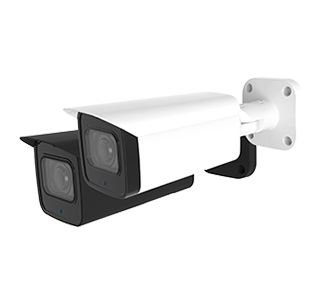
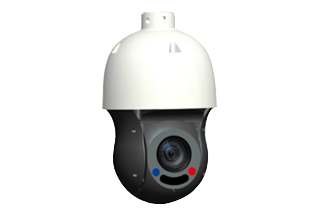
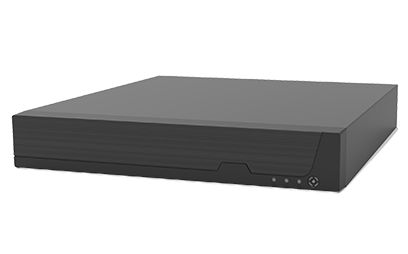
How artificial intelligence at the network edge is transforming the humble NVR from a passive recording box into the brain of a modern security ecosystem.
For two decades, the Network Video Recorder (NVR) has played a supporting role in video surveillance. Cameras captured the footage; the NVR simply stored it and streamed it back when someone needed to review an incident. It was a digital filing cabinet — essential, but passive.
That era is ending.
A new generation of edge AI is pushing intelligence out of the cloud and directly onto cameras and recorders, and the NVR is being reborn as the analytical brain of the security ecosystem. In this article, we'll explore what edge AI actually is, why it pairs so naturally with NVR systems, what capabilities it unlocks today, and where this technology is heading over the next five years.
Why NVR Systems Are the Natural Home for Edge AI
The NVR system sits at a unique junction in a surveillance network: every camera stream flows through it, and every recording lands on its drives. That makes it the perfect place to add intelligence. Several factors make this convergence inevitable:
1. Bandwidth economics
A 16-camera 4K system generates roughly 1.5–3 TB of raw video per day. Transmitting all of that to the cloud for AI analysis is impractical for most businesses. When the NVR processes video locally, it can reduce that to a few megabytes of structured event data.
2. Latency matters in security
When someone climbs a fence, you need an alert in seconds, not minutes. Round-tripping video to a distant data center adds delay; on-device inference responds in milliseconds. Real-time deterrence — sirens, strobe lights, two-way audio — only works with edge-level latency.
3. Privacy and compliance
Regulations like GDPR and an increasing patchwork of local privacy laws are making it harder to justify shipping identifiable video footage off-site. Edge AI keeps raw video inside the building. Only anonymized metadata or event snippets ever leave — and in many configurations, nothing leaves at all.
4. Reliability without the internet
Cloud-dependent systems fail when the connection fails. An AI-powered NVR system keeps detecting, recording, and alerting even during an internet outage — a non-negotiable requirement for critical infrastructure.
What Edge AI Unlocks on a Modern NVR Today
This isn't a futuristic scenario. Capabilities that were research projects five years ago are now shipping in mid-range commercial NVRs.
Intelligent event detection
Modern NVRs distinguish between people, vehicles, and animals with over 95% accuracy, virtually eliminating the false alarms that plagued older motion-detection systems. A falling tree branch no longer pages your guard at 3 a.m. — a person loitering at your loading dock does.
Natural-language video search
Perhaps the most transformative feature: the ability to type "person in red jacket near gate 3, yesterday afternoon" and get results in seconds. Edge AI NVRs index footage by content — appearance, clothing color, vehicle type, direction of movement — turning hours of manual scrubbing into a five-second query.
Unattended object and loitering detection
Bags left in an airport terminal, vehicles idling too long at a restricted entrance, someone pacing outside a closed store — these behavior-based events are now detected automatically and escalated with configurable rules.
Perimeter protection with line-crossing logic
AI NVRs support virtual tripwires, region intrusion rules, and directional detection. Combined with audio-visual deterrence (built-in sirens and strobes), systems can actively stop intrusions rather than merely document them.
People counting and business intelligence
Retail operators use AI NVRs for footfall analytics: peak-hour heatmaps, queue lengths, dwell time at displays. The same hardware serving security now doubles as a business intelligence sensor — often justifying its cost through operations insights alone.
Operational health monitoring
AI also watches the system itself: camera tampering, lens obstruction, focus drift, and storage anomalies are flagged automatically — closing the "silent failure" gap that has embarrassed the industry for decades.
The Architecture Shift: NVR as the Local AI Hub
Looking ahead, the NVR's role is expanding from recorder to edge AI hub. Three architectural trends are driving this:
1. Hybrid cloud intelligence. Local edge devices handle real-time detection; the cloud handles long-term trend analysis, cross-site correlation, and model updates. The best systems use both — raw video never leaves site, but learned intelligence is shared fleet-wide.
2. Continuous model improvement. Manufacturers now push improved AI models to deployed NVRs via firmware updates. A recorder bought in 2024 can gain better detection accuracy, new analytics, and new object classes in 2026 — hardware that appreciates in capability instead of depreciating.
3. Metadata as the new record. As storage shifts from "keep everything for 30 days" to "keep events forever, raw video for weeks," the NVR system becomes primarily a searchable database of events, with full-resolution video available on demand. This changes storage economics dramatically — AI-driven compression and event-based retention can cut storage requirements by 40–60%.
Challenges to Watch
No honest look at the future skips the hard parts:
- Compute constraints. Running 32 channels of AI analytics on a fanless box requires serious NPUs and careful thermal design. Budget-tier "AI" NVRs often overpromise and under-deliver on channel counts.
- Interoperability. The ONVIF standard covers video streams, but AI metadata standards are still maturing. Mixing camera brands with third-party NVR system analytics can produce inconsistent results — verify cross-vendor compatibility before committing.
- Algorithmic bias and false positives. Detection accuracy varies across lighting conditions, weather, and demographics. Deploy operators still need human review workflows for consequential decisions.
- Privacy governance. Facial recognition and behavioral analytics sit in a shifting legal landscape. Organizations should adopt clear policies before enabling these features, not after an incident.
- Cybersecurity. An intelligent NVR system is a networked computer with privileged access. Firmware signing, encrypted streams, MFA on remote access, and regular patching are no longer optional.
The convergence of edge AI and NVR technology is the most significant shift in video surveillance since the move from analog to IP. The NVR system is no longer the place where footage goes to be forgotten — it's becoming a real-time analytical engine that understands what it sees, acts on what matters, and learns continuously over time.
For organizations, the practical implications are straightforward: fewer false alarms, faster investigations, lower bandwidth and storage costs, and surveillance systems that finally deliver operational value beyond loss prevention.
The cameras have been watching for years. Now, with edge AI, they're starting to understand — and the NVR system is where that understanding lives.