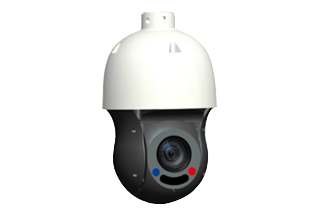
False alarms are a common challenge for modern video surveillance systems. Conventional security cameras may trigger alerts whenever they detect movement, even when the movement comes from harmless sources such as passing vehicles, animals, changing light conditions, or moving vegetation.
Smart IP cameras address this challenge by combining network video surveillance with intelligent video analytics. Instead of simply detecting movement, advanced cameras can analyze visual information and identify specific objects, activities, or events.
By filtering irrelevant activity before an alert is generated, smart IP cameras can help security teams focus on events that require attention while reducing unnecessary notifications.
How AI Detection Helps Reduce False Alarms
Smart IP cameras can use AI-based algorithms to distinguish between different types of objects and activities.
Instead of treating every moving object equally, the system can be configured to focus on specific categories.
For example, a surveillance system may be configured to trigger an alert when a person enters a restricted area while ignoring vehicles moving on an adjacent road.
This approach can significantly improve the relevance of security notifications.
Human Detection
Human detection allows the camera to identify people within a defined monitoring area.
This can be useful in applications such as:
-
Building entrances
-
Restricted industrial areas
-
Warehouses
-
Perimeter security
-
Parking facilities
When the surveillance system is configured to respond specifically to human activity, harmless movement from other objects can be filtered out.
Vehicle Detection
Vehicle detection can distinguish vehicles from people and other moving objects.
For example, a camera monitoring a loading area may be configured to detect vehicles entering a designated zone without generating alerts for pedestrians outside the restricted area.
Object Classification
More advanced analytics can classify detected objects into categories.
This allows security systems to apply different rules to different objects and create more targeted event notifications.
How Detection Zones Improve Alarm Accuracy
Another way smart IP cameras can reduce false alarms is through configurable detection zones.
Instead of analyzing the entire camera view equally, operators can define specific areas that require monitoring.
For example, a camera installed near an industrial facility might cover:
-
A public road
-
A parking area
-
A building entrance
-
A restricted storage zone
If only the storage zone requires intrusion alerts, the system can focus the relevant detection rule on that area.
This helps prevent normal activity in surrounding areas from unnecessarily triggering alarms.
Line-Crossing Detection for Targeted Monitoring
Line-crossing detection can provide another layer of event filtering.
A virtual line can be created across a specific area of the camera image. An alert is generated only when a detected object crosses that line according to the configured direction or rules.
This can be useful for:
-
Perimeter protection
-
Restricted entrances
-
Warehouse access areas
-
Construction sites
-
Industrial facilities
Compared with general motion detection, line-crossing rules can provide more specific information about where and how an event occurs.
Intrusion Detection and Restricted Areas
Smart IP cameras can also support intrusion detection based on virtual boundaries or defined regions.
For example, an operator can define a restricted zone around equipment, storage areas, or building entrances.
When a person enters the designated area, the system can generate an event notification.
This allows the surveillance system to focus on activity that matches predefined security rules rather than responding to every movement within the camera's entire field of view.
How Smart IP Cameras Handle Environmental Changes
Outdoor surveillance environments can be particularly challenging.
Changing lighting, shadows, weather, vegetation, and moving objects can create frequent changes in camera images.
Smart analytics can help distinguish relevant objects from some environmental changes.
However, performance depends on factors such as camera positioning, image quality, lighting, scene complexity, algorithm design, and configuration.
For this reason, intelligent detection should be combined with appropriate installation and system settings rather than treated as a standalone solution.
Better Alerts Mean More Efficient Security Management
Reducing false alarms is not only about improving camera performance. It can also improve the efficiency of security operations.
When operators receive too many irrelevant alerts, they may spend significant time reviewing events that do not require action.
More targeted alerts can help teams:
-
Prioritize important events
-
Reduce unnecessary video reviews
-
Improve response efficiency
-
Reduce notification fatigue
-
Manage larger surveillance networks
For businesses operating multiple cameras, this can become particularly important.
Smart IP Cameras and Centralized Surveillance
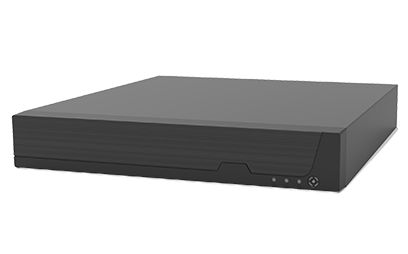
Smart IP cameras can be integrated with NVRs, video management platforms, and other security systems.
Instead of manually reviewing continuous video feeds, operators can use event information to locate relevant recordings more efficiently.
For example, a system may allow operators to search for events involving specific object types, detection zones, or predefined alarm conditions.
This can make large-scale video surveillance easier to manage.
Instead of responding to every change in the camera image, advanced systems can focus on specific objects, zones, directions, and events. Human detection, vehicle detection, line-crossing detection, and intrusion detection can all help make security alerts more targeted.
For businesses managing commercial, industrial, or outdoor surveillance systems, reducing unnecessary alerts can make security operations more efficient and easier to manage. However, the effectiveness of intelligent detection depends on camera capabilities, environmental conditions, installation, and configuration.
Choosing the right smart IP camera and setting appropriate detection rules can therefore be an important part of building a more efficient video surveillance system.