Modern border surveillance requires security teams to monitor large and often difficult-to-access areas under changing environmental conditions. Fixed cameras can provide continuous views of specific zones, but they cannot easily follow a moving target or change their field of view.
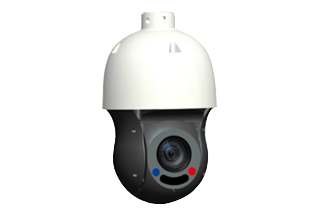
This is where PTZ cameras—pan-tilt-zoom cameras—play an important role. Their ability to pan horizontally, tilt vertically, and optically zoom allows one camera system to survey broad areas and then focus on a specific point of interest. The U.S. Department of Homeland Security describes PTZ cameras as providing greater flexibility for real-time viewing than fixed cameras, including manual control, automatic scanning, and programmable preset positions.
Thermal Imaging Extends Surveillance Beyond Daylight
Border surveillance does not stop when daylight disappears. Darkness, fog, rain, dust, and other conditions can make conventional visible-light imaging more difficult.
Thermal cameras detect infrared radiation associated with heat rather than depending primarily on visible illumination. This can make thermal imaging useful for detecting people and vehicles in darkness and certain challenging environmental conditions.
When thermal imaging is integrated into a PTZ platform, operators can use thermal imagery for detection and a visible camera for additional visual detail.
This bi-spectral approach can reduce the need to operate separate camera systems for every surveillance task.
PTZ Auto-Tracking for Moving Targets
A border surveillance system may need to follow a person or vehicle after an initial detection.
Modern systems can connect PTZ cameras with video analytics, thermal sensors, or other detection technologies. When a target is detected, the PTZ can be directed toward its location and, where supported, automatically track the target.
For example, perimeter-security systems can use fixed cameras or analytics to identify an intrusion and then cue a PTZ camera toward the event for closer observation.
This division of responsibilities is important because a PTZ camera viewing one target cannot simultaneously provide continuous coverage of every other direction.
Integrating PTZ Cameras With Radar and Other Sensors
PTZ cameras do not have to operate as standalone devices.
Modern border-surveillance architectures can combine multiple sensing technologies, including:
-
PTZ cameras
-
Fixed cameras
-
Thermal cameras
-
Radar
-
Video analytics
-
Access-control systems
-
Geographic positioning
-
Centralized video management systems
Radar can provide detection and location information, while a PTZ camera can be directed toward the corresponding area for visual assessment.
Some modern systems are designed to coordinate radar, thermal cameras, visible cameras, and PTZ tracking to maintain awareness across larger areas.
AI Helps Reduce Unnecessary Alerts
Large border areas can contain many sources of movement, including vehicles, animals, vegetation, weather effects, and people.
AI-based video analytics can help classify detected objects and distinguish certain types of activity.
For example, modern multi-sensor PTZ systems can use edge-based analytics to detect and classify people and vehicles.
The objective is not simply to generate more alerts. A useful system should provide operators with information that helps them determine which events require attention.
Preset Patrols for Large Areas
PTZ cameras can be programmed with predefined positions.
A camera might periodically inspect:
-
A fence section
-
A nearby access road
-
A gate
-
An open field
-
Another section of the perimeter
The U.S. DHS video-security guidance notes that PTZ cameras can operate in automatic scan modes and use programmed preset positions to change views according to scheduled intervals.
This makes preset patrols useful for areas where operators need periodic visual coverage of multiple locations.
Ruggedized PTZ Cameras for Outdoor Environments
Border surveillance equipment may be exposed to substantial environmental stress.
Depending on the deployment location, cameras may need to operate under:
-
Extreme temperatures
-
Rain
-
Dust
-
Snow
-
Wind
-
High humidity
-
Vibration
For this reason, outdoor PTZ systems often use sealed and ruggedized housings. Some specialized systems are designed for IP-rated environmental protection and extended temperature ranges.
The appropriate environmental specification depends on the deployment site and equipment requirements.
Fixed Cameras and PTZ Cameras Work Together
PTZ cameras should not necessarily replace fixed cameras.
A more comprehensive architecture can combine both.
Fixed cameras: provide persistent observation of specific areas.
Thermal cameras: support detection in darkness and challenging visibility conditions.
PTZ cameras: provide flexible viewing, zoom, and target tracking.
Radar: can provide detection, classification, and location information.
This layered approach allows each sensor type to perform the task for which it is best suited. Industry security solutions increasingly combine PTZ, thermal imaging, radar, and analytics in this way.
Mobile PTZ Platforms for Remote Areas
Not every border-surveillance location has permanent infrastructure.
Some PTZ systems can be deployed on vehicles or other mobile platforms, providing surveillance capability where fixed installations are impractical.
Mobile thermal PTZ systems can combine thermal detection, visible imaging, zoom, and pan-tilt movement for patrol and temporary surveillance applications.
This can be useful when surveillance requirements change between locations or when temporary monitoring is required.
Remote Operation and Centralized Monitoring
Network-connected PTZ cameras can be integrated into centralized video management systems.
Operators can potentially control camera direction, select presets, zoom into areas of interest, review video, and coordinate information from multiple sensors through a common interface.
This allows surveillance teams to manage geographically distributed camera systems without requiring an operator to be physically located next to every camera.
PTZ cameras anchor modern border surveillance systems because they combine wide-area coverage, flexible positioning, optical zoom, and target tracking in a single platform.
Their capabilities become even more valuable when integrated with thermal imaging, radar, AI analytics, fixed cameras, and centralized video-management systems.
For large and challenging border environments, the most effective architecture is often not a single camera type but a layered surveillance network in which each sensor contributes a specific capability. PTZ cameras serve as the flexible visual-verification and tracking layer, helping operators move from a broad-area alert to a closer view of a specific event.