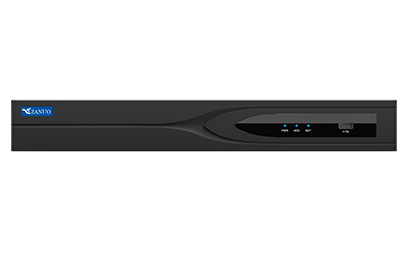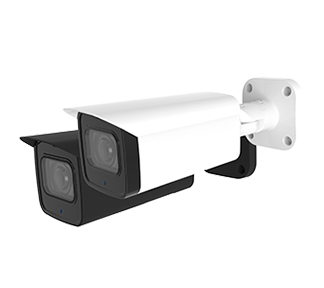
Modern NVR systems are responsible for continuously recording and storing video from multiple IP cameras. As surveillance networks expand, the amount of video data generated every day can become substantial.
A storage failure can result in missing recordings, interrupted surveillance, or even the loss of important security footage. For applications that require continuous video monitoring, storage reliability is therefore just as important as camera and recorder performance.
RAID storage can improve NVR system reliability by combining multiple drives into a storage configuration designed to provide redundancy, fault tolerance, performance, or a combination of these characteristics.
How RAID Improves NVR System Reliability
1. Provides Data Redundancy
One of the primary advantages of RAID is data redundancy.
Some RAID configurations duplicate or distribute information across multiple drives so that data can remain accessible if one or more drives fail.
For surveillance applications, this can help reduce the risk of losing important video recordings because of an individual hard drive failure.
2. Provides Drive Fault Tolerance
RAID can allow an NVR system to continue operating after a supported drive failure.
For example, RAID 1 mirrors data between two drives. If one drive fails, the other drive can continue providing access to the mirrored data.
Other RAID configurations use parity to provide fault tolerance with different combinations of capacity and redundancy.
This makes RAID particularly valuable for NVR deployments where continuous recording is important.
3. Reduces the Impact of Hard Drive Failures
Surveillance storage drives operate continuously and may experience substantial workloads.
Over time, mechanical or solid-state storage devices can experience failures.
Without redundancy, a failed drive can potentially result in lost recordings. With an appropriate RAID configuration, the NVR may continue operating while the failed drive is replaced and the array is rebuilt.
This can help minimize downtime and reduce the operational impact of storage failures.
RAID and Continuous NVR Video Recording
Continuous recording is a fundamental requirement for many security applications.
A storage failure can interrupt recording or create gaps in surveillance footage.
By providing redundancy and fault tolerance, an appropriate RAID configuration can help the NVR maintain recording availability when a supported drive fails.
This is especially valuable for:
-
Industrial facilities
-
Warehouses
-
Transportation hubs
-
Retail stores
-
Data centers
-
Commercial buildings
-
Critical infrastructure
-
Large-scale surveillance networks
RAID Storage for Multi-Camera NVR Systems
The number of cameras directly influences NVR storage requirements.
A system with four cameras generates significantly less data than one monitoring 32, 64, or more IP cameras.
As the number of cameras increases, storage capacity and reliability become increasingly important.
A properly designed RAID-based NVR storage system can help organizations manage large volumes of surveillance footage while providing an additional layer of storage fault tolerance.
RAID, Video Resolution, and Storage Requirements
Higher-resolution cameras generate larger video files.
For example, surveillance systems may use:
-
1080p cameras
-
4K cameras
-
High-frame-rate cameras
-
AI-enabled cameras
-
Multi-stream IP cameras
As resolution and frame rate increase, storage requirements also increase.
Therefore, RAID selection should be considered together with:
-
Number of cameras
-
Video resolution
-
Frame rate
-
Compression technology
-
Recording schedule
-
Retention period
-
Required redundancy
How RAID Supports NVR Data Protection
RAID should be viewed as a storage reliability technology, not a complete backup strategy.
RAID can protect against certain types of drive failures, but it does not necessarily protect recorded video from:
-
Accidental deletion
-
Malware
-
Fire
-
Flooding
-
Theft
-
Severe hardware damage
-
System-wide failures
For critical surveillance data, organizations may combine RAID with additional backup or archival systems.
RAID storage can significantly improve NVR system reliability by providing data redundancy, drive fault tolerance, and greater storage resilience.
For professional surveillance systems that continuously record video from multiple IP cameras, RAID can reduce the operational impact of individual storage drive failures and help maintain access to important surveillance footage.