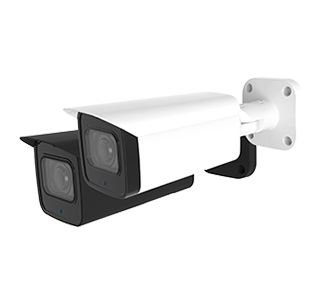
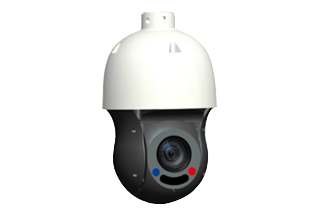
A sterile zone is the strip of ground where nobody has any legitimate reason to stand. Around a high-voltage substation or a fuel terminal, that strip is the last physical barrier before consequences that do not scale with the size of the intrusion: one person with a bolt cutter at a 132 kV gantry, or one open flame against a tank bund, is an event measured in millions and in headlines rather than in stolen property.
Two sites, two different enemies
Both are called "critical sites", and the similarity ends at the fence.
A substation's threat is presence and contact. The asset is copper, aluminium, and porcelain, and its failure mode is arc flash: a person who climbs a gantry does not merely steal; they create a fault path. The site is unmanned, electrically noisy, and legally a place where unauthorised approach distances are defined in metres. The IP camera's job is to establish, beyond argument, that no one entered the compound and approached the equipment — and to do it while the yard is lit only by sodium lamps and the electromagnetic environment is hostile to anything with a cable.
A fuel terminal's threat is proximity and objects. The asset is a tank farm, a manifold, a loading gantry, and a bund. The dangerous acts are placing something against a tank shell, opening a valve, cutting a pipeline for a tap, or driving a vehicle into a zone where a ignition source matters. The site may be manned at the gate and unmanned in the field; it is regulated for explosive atmospheres; and its physical layout — bunds, pipe racks, stairs, foam lines — creates a landscape of occlusions that a perimeter IP camera does not see through.
That difference drives placement. On a substation you usually want the IP camera outside the hazard, looking in along the ground. On a terminal you often want the IP camera looking down the bund from a height, because the bund wall itself hides everything at ground level.
The detection problem, stated honestly
Most sterile-zone projects fail not at the IP camera but at the sentence used to specify it. "Cover the perimeter" is not a requirement. What you actually need is a statement like: detect a walking adult crossing the sterile boundary anywhere along 480 m, within 10 seconds, in rain and at night, with no more than two nuisance alarms per IP camera per night, and deliver an image in which an operator can decide whether to dispatch within 30 seconds.
Three numbers live in that sentence and all three get skipped:
- Probability of detection, measured by test, not by datasheet. Walk the line at three distances, in the worst light you expect, and count.
- Nuisance alarm rate per IP camera per night. This is the number that decides whether the system is used or muted in month three. A IP camera generating fifteen alarms a night will be ignored by week two, and a muted IP camera protects nothing.
- Time to assessment. Detection without a usable image is an alarm, not intelligence. If the operator cannot see what triggered it, the guard drives out to check, and you have converted a IP camera system into an expensive doorbell.
Write these into the specification and the vendor conversation changes immediately.
Geometry: the part that cannot be fixed later
Height and angle. A sterile zone is watched across ground, which means the target is foreshortened by the viewing angle. A IP camera at 3 m looking at a person 40 m away sees mostly the top of a head. Practical designs keep the look-down angle moderate — steep enough to see over the fence and past the bund, shallow enough that a person still reads as a person at the far edge. When the geometry is wrong, no lens change recovers it.
Pixel density, measured at the far edge. Detection is commonly specified around 80–125 px/m on target, recognition higher, identification higher still (the IEC 62676-4 style scale). The mistake is quoting pixel density at the IP camera's near field and assuming it holds at the fence 60 m away. Compute it at the worst-case point and design to that.
Coverage overlap. One IP camera per straight run leaves a seam at the corner and a blind cone at the pole. Overlap enough that a target crossing between fields never disappears, and place the seam where a person would have to walk through it, not where they could step around it.
Grazing angles and the ground plane. At shallow angles, a person lying down or crawling nearly vanishes. If crawling matters — and at a tank bund it does — add a second, higher viewpoint rather than trying to solve it with analytics.
The occlusion survey. Walk the site at the height of a person and photograph what the IP camera sees. Bund walls, pipe racks, tank stairs, transformer coolers, cable trenches, and parked maintenance vehicles all create pockets. Every pocket is a place where the analytics will be blind and where a determined intruder will stand.
Visible, thermal, or both
Visible cameras carry the identification and the evidential value: colour, clothing, tools, vehicle. They fail in fog, heavy rain, and at the far edge of illumination.
Thermal cameras detect people reliably in complete darkness and through light fog, and they are largely immune to headlights and shadow. They do not identify, and they can be fooled by warm surfaces — a sun-heated bund wall at dusk, a hot exhaust, a steam plume.
The workable combination on a critical site is usually thermal for the detection line and visible (or a PTZ slaved to the thermal alarm) for assessment. That is also the cheapest way to keep nuisance alarms down, because a thermal tripwire ignores the headlights that make a visible camera alarm every time a truck turns around outside the fence.
Illumination. If the visible camera depends on IR, check the actual range against the scene reflectance, not the datasheet figure. Wet asphalt and vegetation absorb; a white tank shell reflects and blooms. And on a substation, IR illuminators attract insects, which produce exactly the kind of motion the analytics is looking for.
Detection logic that survives a season
What the analytics should be asked to do, in order of usefulness:
- Directional tripwire on the sterile boundary, armed to alarm on approach and not on departure. Half of all nuisance alarms are caused by unarmed direction logic.
- Intrusion into a polygon covering the ground between fence and asset, not the fence itself — the fence generates alarms from wind, animals, and maintenance.
- Loitering and dwell for the access road and the gate approach, where a parked vehicle is more suspicious than a passing one.
- Object left behind at a tank base or against a door. This is the one analytic that addresses the fuel terminal's actual threat model, and it is the one most often omitted because it is harder to tune.
- Climb and cross detection at the fence, best fused with fence-mounted sensors rather than asked of video alone.
- PTZ handoff: thermal or fixed camera detects, PTZ slews, operator assesses. Handoff presets must be tested at night, since daytime presets frequently point at nothing useful after dark.
Tuning rules that save projects: set the minimum object size to a person at the farthest point; set the schedule by shift, not by clock; suppress the maintenance gate during known works; and review the alarm log weekly for the first month instead of waiting for the complaint.
Substation realities: electricity, weather, and grounding
An HV yard is an unfriendly place for networked electronics, and the failures are predictable:
- EMI and transients. Route fibre, not copper, from the yard to the cabinet. Where copper is unavoidable, use shielded cable with proper bonding and surge protection at both ends.
- Grounding. IP Camera masts inside or near the yard become part of the grounding environment. Bond them per the site's grounding design (IEEE 80 practice) and keep IP camera potential equal to structure potential — a mast that is not bonded is a spark gap.
- Cabinet location. Put the network cabinet outside the yard, not beside the gantry. It is easier to service, cooler, and not exposed to switching transients.
- Lightning. Aerial masts on open ground attract strikes. Surge arresters on PoE, fibre isolation, and a documented inspection after storm season.
- Corona and UV. Insulator corona produces UV and audible noise; it also ages plastics. Choose housings rated for the UV load and avoid mounting directly above insulator strings where the IP camera looks into the discharge.
- Wildlife. Birds perch on masts and nest in housings; nests are both a fire risk and a source of false alarms. Specify perching deterrents at install time, not after the first summer.
Fuel terminal realities: zoning, vapour, and wash-down
- Zoning decides the IP camera, not the other way around. Read the area classification drawing before choosing hardware. If the IP camera must sit inside a classified zone, it needs the appropriate Ex certification (IEC 60079 / ATEX); if it can sit outside the zone and look in, that is almost always the better design — cheaper, easier to service, and no hot work permit to change a lens.
- Vapour and steam defeat visible analytics. Loading arms vent, tanks breathe, foam tests discharge. Thermal is less affected by vapour than visible, but a steam plume still looks like a moving object. Tune the zone to exclude the vent path rather than trying to filter the symptom.
- Corrosion. Coastal terminals and product-handling areas eat aluminium housings. Specify 316 stainless or coated housings, sealed connectors, and a maintenance interval that includes inspecting the gasket, not just cleaning the dome.
- Wash-down and deluge. Foam or water deluge activation will soak every camera in the bund. Either accept the loss or place IP cameras outside the discharge envelope.
- The bund is a blind spot. A 1.2 m bund wall hides a standing person from any ground-level IP camera. Height, or a IP camera on the far side looking back, is the only fix.
- Product theft is a pipeline problem, not a fence problem. Tapping happens on the line, often outside the terminal boundary. Coverage of the pipeline right-of-way and the manifold is a different design from tank-farm coverage, and it usually needs its own IP cameras and its own power source.
Privacy and industrial relations
A sterile zone is usually empty, which makes the privacy argument easier — but not trivial:
- You are detecting presence, not identity. There is no legitimate need for facial recognition in a zone where no authorised person should be. Keep the analytics at "person present" and the retention short, and you avoid most of the regulatory exposure.
- Worker consultation. Maintenance staff will be in the zone under permit. If the system alarms on them and the alarm goes nowhere, they learn to ignore it; if it summons a response, they learn to resent it. Publish the permit-to-work interface: who suspends the zone, how, and for how long.
- Signage and retention. Notices at the gate, a stated retention period, and a documented access list for footage. Critical-infrastructure exemptions exist in some jurisdictions and not others; assume the stricter reading until legal tells you otherwise.
Integration: the alarm has to go somewhere
A sterile-zone IP camera produces an event, not a response. The design is only complete when the event reaches a person with authority to act:
- VMS or PSIM for alarm presentation, with the pre- and post-event recording attached.
- Access control and permit-to-work to suppress alarms during authorised entry, automatically where possible.
- Sirens, lighting, or recorded announcements as a first deterrent tier — effective on casual intruders, irrelevant to a determined one, and worth having because it converts a detection into a documented attempt.
- SCADA or OT event correlation on a substation: a IP camera alarm and a protection relay operation five seconds apart is a different situation from either alone. Keep the video network separated from the OT network (IEC 62443 zoning), and pass only events across the boundary.
- Guard tour and dispatch with a written verification step: operator sees, decides, dispatches, logs. No step, no accountability.
The failure patterns worth memorising
- The IP camera covers the fence, not the ground behind it, so the zone itself is unwatched.
- Pixel density was computed at 20 m and quoted for 60 m.
- Analytics armed on the fence, so every fox and every windy night creates an alarm.
- Alarm count is fine but nobody can see what triggered it, so the guard drives out.
- Thermal camera detects, visible camera is 40° off, so the handoff preset shows an empty yard.
- Permit-to-work is not integrated, so every maintenance shift trains staff to ignore alarms.
- A single IP camera per straight run, with a blind cone at each pole and a seam at the corner.
- No acceptance test, so "commissioned" means "powered up".
A sterile zone is one of the few places where a IP camera system is genuinely the primary control rather than a record of what already happened. That raises the bar: geometry computed at the worst point, detection proven by walking the line, and an alarm path that ends with somebody deciding. Everything else is a dome on a pole.