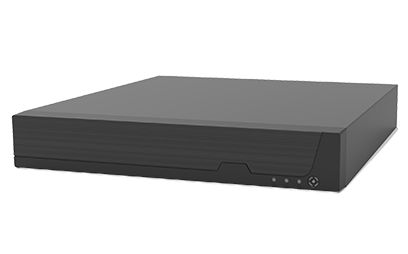
Network Video Recorder (NVR) systems have become an essential part of modern video surveillance, helping businesses, homeowners, and public facilities monitor their properties through IP cameras and centralized recording platforms. However, not every market has the same surveillance requirements. Buyers in different regions often prioritize different combinations of video quality, storage capacity, remote access, cybersecurity, environmental durability, and system integration.
For security equipment manufacturers, distributors, system integrators, and procurement teams, understanding these regional differences is essential to selecting and developing the right NVR solutions. A feature that is critical in one market may be a secondary consideration in another, depending on local regulations, infrastructure, climate, installation practices, and customer budgets.
Why NVR Feature Priorities Differ by Region
Although NVR systems share the same basic purpose—recording, managing, and retrieving video from IP cameras—the conditions in which they operate vary considerably.
Several factors influence regional purchasing preferences.
Security requirements: Retail stores, residential properties, factories, transportation facilities, and critical infrastructure have different monitoring objectives. Some require basic recording, while others need advanced analytics, centralized management, and rapid incident investigation.
Network infrastructure: Reliable broadband and local network capacity influence the feasibility of remote monitoring, cloud integration, and high-resolution video transmission.
Climate and installation environment: High temperatures, humidity, dust, and outdoor equipment exposure can affect the requirements for enclosures, cooling, power protection, and installation design.
Regulatory and privacy requirements: Video retention, data protection, cybersecurity, and restrictions on surveillance equipment may affect purchasing decisions and product eligibility.
Budget and maintenance resources: Some customers prioritize advanced features and long-term scalability, while others focus on affordability, ease of installation, and low maintenance costs.
Local support and compatibility: Buyers may need localized interfaces, regional technical support, compatibility with existing cameras, and integration with local alarm or access-control systems.
These factors mean that a successful NVR product strategy should balance a reliable technical foundation with features that address the specific needs of each target market.
North America: Cybersecurity, Integration, and Advanced Analytics
In the United States and Canada, NVR buyers may place substantial emphasis on cybersecurity, compatibility with existing security infrastructure, remote administration, and advanced video analytics. Priorities vary between residential customers, small businesses, enterprise users, and public-sector procurement.
Key Feature Priorities
Cybersecurity and secure remote access
Buyers increasingly need secure account management, strong authentication, encrypted communications where supported, controlled user permissions, and timely firmware updates.
For commercial installations, administrators may also require centralized configuration, audit logs, and procedures for managing multiple devices across different locations.
ONVIF and camera interoperability
Compatibility with third-party IP cameras can be important when businesses upgrade their recording systems without replacing all existing equipment.
Buyers should verify the specific ONVIF profiles and functions supported by both the NVR and cameras rather than assuming that a shared compatibility label guarantees every feature will work.
Video analytics
Depending on the application, buyers may look for motion detection, people or vehicle classification, intrusion detection, line-crossing alerts, and other analytics that help reduce unnecessary notifications.
The accuracy and usefulness of these features depend on camera positioning, lighting, scene conditions, and software capabilities.
Enterprise integration
Larger organizations may require compatibility with video management software, access-control platforms, alarm systems, and centralized monitoring tools.
What Suppliers Should Emphasize
For this market, product documentation should clearly explain cybersecurity controls, supported integrations, firmware policies, analytics limitations, and system scalability.
For regulated or government-related projects, suppliers should also help customers verify applicable procurement restrictions and equipment requirements before purchasing.
Europe: Privacy, Compliance, and Energy Efficiency
European NVR buyers often need to consider data protection, cybersecurity, interoperability, and long-term operating costs. Requirements differ by country and application, so suppliers should avoid treating Europe as a single regulatory environment.
Key Feature Priorities
Privacy and data protection
Video surveillance deployments that process personal data may be subject to the General Data Protection Regulation (GDPR) and applicable national laws.
Depending on the deployment, useful NVR capabilities can include configurable retention periods, role-based access controls, access logs, controlled export of recordings, and privacy-masking functions.
These features can help operators implement appropriate safeguards, but purchasing an NVR with privacy controls does not automatically make a surveillance system legally compliant. The system's purpose, placement, access practices, retention policies, and legal basis also matter.
Storage efficiency
Efficient compression, configurable recording schedules, motion-triggered recording, and practical storage management can help control disk requirements and retention costs.
Buyers should compare actual image quality and storage consumption under representative operating conditions rather than relying solely on advertised compression ratios.
Interoperability
Mixed-brand camera environments are common in upgrade projects. Clear compatibility documentation can simplify installation and reduce integration problems.
Energy consumption and reliability
For installations that operate continuously, power consumption, thermal management, component quality, and serviceability can affect long-term operating costs.
What Suppliers Should Emphasize
Suppliers targeting European customers should provide clear privacy-related controls, transparent product documentation, appropriate cybersecurity information, and evidence of applicable product conformity.
Where a project involves public spaces, workplaces, or sensitive facilities, buyers should review local legal requirements and obtain appropriate professional guidance.
Asia-Pacific: Scalability, Smart Analytics, and Value for Money
The Asia-Pacific region includes markets with widely different levels of infrastructure development, security requirements, and purchasing power. Nevertheless, many projects place importance on scalability, camera-channel flexibility, smart analytics, and competitive total cost of ownership.
Key Feature Priorities
Flexible channel configurations
Small installations may require four- or eight-channel recorders, while larger commercial projects may need 16, 32, or more channels.
Buyers should consider not only the number of supported cameras but also maximum incoming bandwidth, decoding performance, resolution support, and storage capacity.
Smart detection and search
People and vehicle classification, event-based recording, and intelligent video search can help users review footage more efficiently.
The exact capabilities may depend on whether analytics are processed by the camera, the NVR, or a connected software platform.
Remote monitoring
Mobile applications, web interfaces, and centralized management tools can be valuable for businesses managing several locations. Secure authentication and reliable connectivity remain essential.
Cost-performance balance
Buyers often compare purchase price against channel capacity, storage options, warranty coverage, technical support, and expected operating life.
What Suppliers Should Emphasize
Manufacturers should offer clearly differentiated product tiers, from entry-level systems for small installations to more capable recorders for multi-site businesses.
Localized documentation, installer training, and dependable after-sales support can also help distributors compete in diverse regional markets.
Middle East: Heat Resistance, Reliability, and Large-Scale Monitoring
In parts of the Middle East, high ambient temperatures, dust, and demanding installation environments can influence surveillance equipment selection. However, actual conditions vary by location, building type, and whether equipment is installed indoors or outdoors.
Large commercial properties, industrial facilities, logistics centers, and infrastructure projects may also require centralized monitoring and extensive camera coverage.
Key Feature Priorities
Thermal performance
Buyers should review the NVR's specified operating temperature range, ventilation requirements, installation clearances, and any applicable derating guidance.
A recorder installed in a climate-controlled security room faces different conditions from one placed in a poorly ventilated cabinet.
Dust management
NVR systems should be installed in suitable enclosures or controlled environments when exposed to dust. Cooling arrangements must account for airflow and contamination without exceeding the equipment's environmental limits.
High-capacity recording
Large projects may require multiple recording units, substantial storage capacity, redundant storage arrangements, and centralized video management.
The correct architecture depends on camera count, recording resolution, frame rate, retention requirements, and network bandwidth.
System reliability
Power conditioning, backup power, monitoring of disk health, and clear maintenance procedures can help reduce recording interruptions.
What Suppliers Should Emphasize
For demanding environments, suppliers should provide verified environmental specifications, storage calculations, recommended installation conditions, and options for system expansion.
Claims such as “industrial-grade” or “high-temperature resistant” should be supported by specific operating limits and appropriate testing.
Latin America: Affordability, Remote Access, and Flexible Installation
Across Latin America, NVR purchasing decisions can reflect a wide range of budgets, infrastructure conditions, and business requirements. Small retailers, residential customers, warehouses, agricultural facilities, and larger enterprises may have very different priorities.
Key Feature Priorities
Affordable system configuration
Buyers may seek practical systems that provide reliable recording without unnecessary complexity. Entry-level channel configurations and straightforward installation can be attractive for smaller businesses.
Bandwidth-conscious remote viewing
Remote monitoring is useful when owners or managers oversee properties from different locations. Efficient streaming settings, adjustable substreams, and mobile-friendly interfaces can help limit bandwidth consumption.
Power continuity
Where power interruptions are a concern, buyers may consider uninterruptible power supplies (UPS), appropriate surge protection, and reliable recovery after power is restored.
An NVR's ability to resume recording after a restart should be confirmed from its specifications or testing.
Local support and replacement parts
Technical assistance, warranty service, and access to compatible hard drives and accessories can influence the practical value of a system over its lifetime.
What Suppliers Should Emphasize
Suppliers can improve customer confidence by offering clear installation guidance, local-language documentation where appropriate, accessible technical support, and configurations that match local connectivity and power conditions.
Africa: Connectivity, Power Stability, and Practical Durability
African markets are highly diverse, ranging from major metropolitan business centers to remote industrial and agricultural sites. NVR requirements depend heavily on the intended application and the infrastructure available at the installation location.
For projects with intermittent connectivity or unstable power, local recording reliability can be especially important.
Key Feature Priorities
Reliable local recording
An NVR should be able to continue recording locally when an internet connection is unavailable, provided its cameras and local network remain operational.
Buyers should confirm how the system behaves during network interruptions and whether remote alerts or synchronization functions require internet access.
Power protection and recovery
Appropriate UPS capacity, surge protection, and restart behavior can help maintain surveillance continuity.
The necessary backup duration depends on the power supply, recorder consumption, connected network equipment, and customer requirements.
Storage and retention flexibility
Buyers should calculate storage requirements based on the number of cameras, resolution, frame rate, compression settings, recording schedules, and desired retention period.
For remote locations, adequate storage and a manageable process for retrieving footage can be more important than continuous cloud connectivity.
Durable installation design
Dust, humidity, heat, and other environmental conditions should be addressed through suitable equipment placement, protective enclosures, and proper installation practices.
What Suppliers Should Emphasize
Suppliers should focus on dependable local recording, realistic storage planning, power resilience, straightforward maintenance, and access to replacement parts.
For sites with limited connectivity, solutions should be evaluated based on their ability to deliver core recording functions without relying on continuous internet access.
Latin America, Africa, and Other Emerging Markets: The Importance of Total Cost of Ownership
Although the specific needs of these regions differ, a common purchasing consideration is the total cost of operating a surveillance system over time.
A low-cost NVR may become expensive if it requires frequent replacement, offers limited compatibility, or creates substantial maintenance demands.
A useful evaluation should consider:
-
Initial equipment and installation costs
-
Camera compatibility and expansion options
-
Hard-drive capacity and replacement costs
-
Power consumption and backup requirements
-
Firmware updates and cybersecurity maintenance
-
Warranty coverage and technical support
-
Expected service life and future upgrade needs
The best value is not always the lowest-priced unit. A properly matched system can reduce installation complexity and help avoid premature replacement.
How Manufacturers Can Adapt NVR Product Strategies to Regional Markets
For NVR manufacturers and distributors, understanding regional priorities is most valuable when it influences product design, product positioning, and customer support.
Develop Clear Product Tiers
A practical portfolio may include entry-level systems for homes and small businesses, mid-range recorders for retail and commercial use, and advanced systems for enterprise or industrial deployments.
Each tier should have clearly documented channel capacity, bandwidth limits, supported storage, and integration capabilities.
Localize Product Documentation
Installation guides, interface translations, compatibility lists, and troubleshooting resources can make products easier to deploy and maintain.
Local-language support is especially useful when equipment is sold through distributor and installer networks.
Validate Environmental Claims
Where heat, dust, or humidity is a concern, manufacturers should publish specific environmental limits and installation requirements supported by appropriate testing.
Generic durability claims are less useful than clear technical specifications.
Strengthen Cybersecurity and Firmware Support
Secure configuration, vulnerability management, firmware maintenance, and transparent support policies are important across markets.
Manufacturers should explain how products receive updates and how customers can protect administrative accounts and remote connections.
Build Regional Support Networks
Distributors and system integrators can help manufacturers understand common installation challenges, customer feedback, and local compliance requirements.
Access to technical support and replacement components can also improve customer satisfaction over the product lifecycle.
Regional feature priorities for NVR systems reflect differences in climate, infrastructure, regulation, installation practices, and customer expectations. Buyers in North America may emphasize cybersecurity and advanced integration, while European projects may place particular importance on privacy and compliance. In other markets, scalability, environmental suitability, power resilience, remote monitoring, and cost efficiency may play a more prominent role.