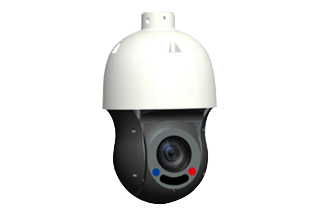
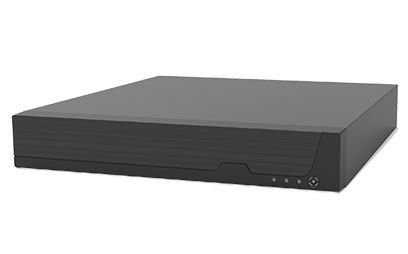
As surveillance networks expand across multiple buildings, facilities, and remote locations, managing individual cameras can become increasingly complicated. PTZ cameras for centralized video management systems provide a practical solution by combining flexible camera movement, optical zoom, remote control, and centralized monitoring.
When integrated with a Video Management System (VMS), PTZ cameras can be monitored and controlled from a single interface. Security teams can quickly view live video, change camera direction, activate presets, manage recordings, and respond to events without physically accessing each camera.
Using Preset Positions for Faster Monitoring
Preset positions are an important feature for PTZ surveillance systems.
A preset stores a specific combination of pan, tilt, and zoom settings. Operators can then recall the position with a single command.
For large facilities, presets can be configured for important areas such as:
-
Entrance gates
-
Loading zones
-
Parking areas
-
Building entrances
-
Perimeter fences
-
Production areas
-
Storage facilities
When integrated into a centralized VMS, operators can quickly switch between these predefined viewing positions.
PTZ Cameras and Automated Patrol
Centralized video management systems can also support automated PTZ patrol functions, depending on the camera and VMS capabilities.
A patrol route can instruct the camera to move between several preset positions at defined intervals. This allows the camera to continuously survey multiple areas.
Automated patrol can be useful when:
-
A large area must be monitored
-
Security personnel cannot continuously control the camera
-
Multiple observation points require regular inspection
-
Remote locations need centralized supervision
Combining automated patrol with live operator control provides greater flexibility.
Integrating PTZ Cameras with Video Analytics
Modern surveillance systems increasingly combine PTZ cameras with video analytics.
Depending on the system configuration, analytics may help identify events such as:
-
Moving objects
-
People entering restricted areas
-
Vehicles
-
Unusual movement
-
Perimeter intrusions
-
Loitering activity
When an event is detected, the VMS may trigger a predefined response, such as directing a PTZ camera toward a specific area or displaying the relevant video stream to an operator.
This creates a more responsive surveillance workflow.
Multi-Camera Monitoring from One Interface
Centralized VMS platforms allow operators to monitor multiple cameras simultaneously.
A surveillance center may combine:
-
Fixed cameras
-
PTZ cameras
-
Thermal cameras
-
Dome cameras
-
Bullet cameras
-
Specialized industrial cameras
PTZ cameras add active viewing capability to the network. While fixed cameras continuously observe designated areas, PTZ cameras can be redirected when additional visual information is needed.
This combination can create a more comprehensive surveillance architecture.
PTZ Cameras for Multi-Site Surveillance
Large organizations may have surveillance cameras distributed across multiple facilities.
A centralized VMS can provide a unified management platform for these locations, depending on the network architecture and software capabilities.
For example, security personnel at a central monitoring center may oversee:
-
Multiple warehouses
-
Manufacturing plants
-
Distribution centers
-
Transportation facilities
-
Commercial properties
-
Remote infrastructure
PTZ cameras at each location can be controlled remotely, allowing operators to investigate events without being physically present.
Network Connectivity and System Integration
IP-based PTZ cameras are commonly integrated into network video surveillance systems.
Reliable network connectivity is important because PTZ control and video transmission depend on communication between the camera, network infrastructure, and VMS.
During system design, organizations should consider:
-
Network bandwidth
-
Video resolution
-
Camera count
-
Storage requirements
-
Network latency
-
Cybersecurity
-
Compatibility between cameras and VMS software
Selecting compatible equipment can simplify deployment and improve system reliability.
PTZ cameras for centralized video management systems combine flexible camera movement with centralized monitoring and control. Through pan, tilt, optical zoom, presets, patrol functions, and potential analytics integration, PTZ cameras can provide a higher level of operational flexibility than fixed surveillance cameras alone.
For large facilities and multi-site surveillance networks, integrating PTZ cameras with a centralized VMS can simplify camera management, improve event response, and help security teams obtain detailed visual information when it matters most. A well-designed system that combines PTZ cameras, fixed cameras, reliable networking, and centralized management can provide a scalable foundation for modern video surveillance.